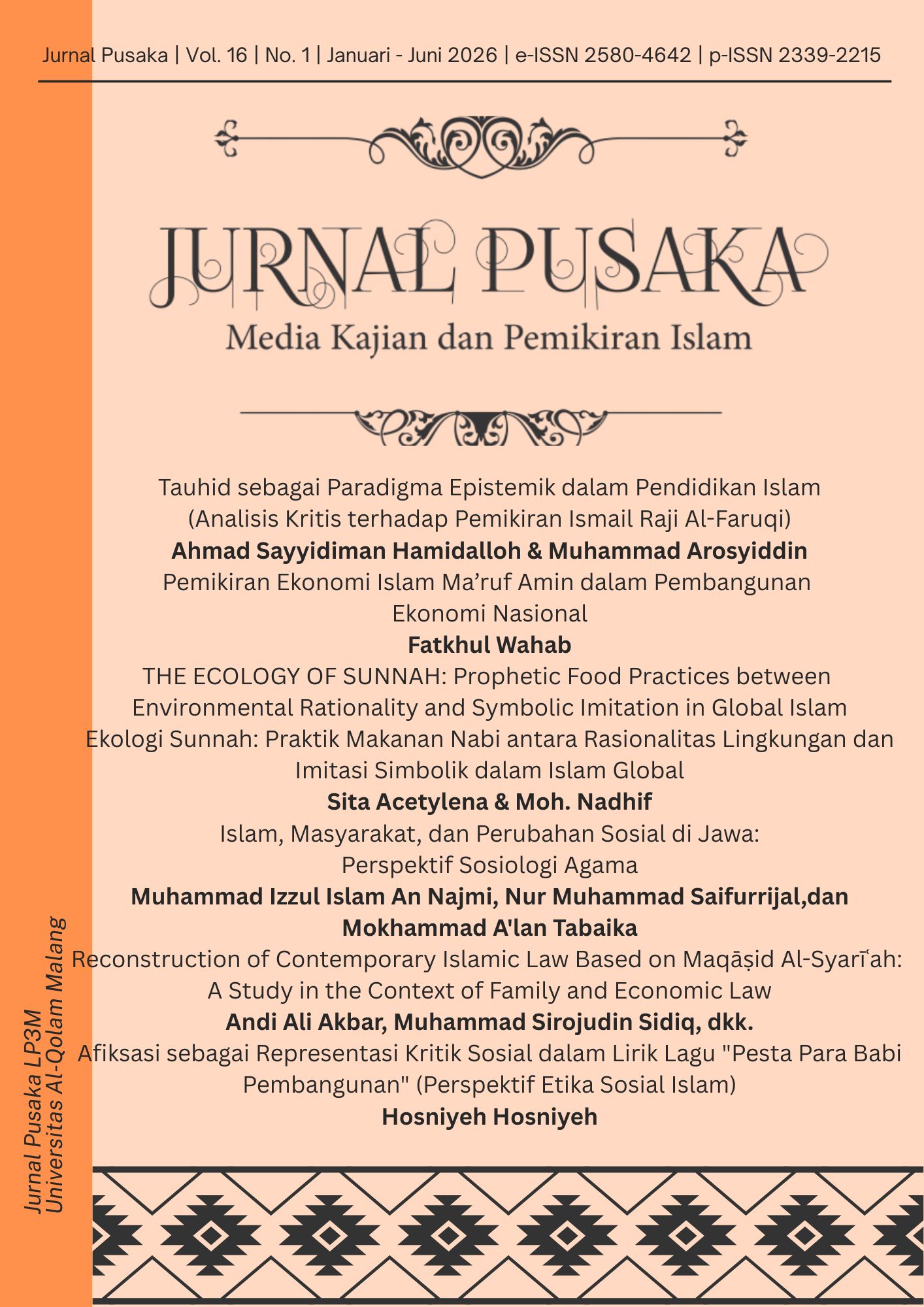
Pemikiran Ekonomi Islam Ma’ruf Amin dalam Pembangunan Ekonomi Nasional
DOI:
https://doi.org/10.35897/ps.v16i1.2649Abstract
Islamic economic development is a comprehensive and holistic concept, as it emphasizes not only material growth but also encompasses moral, social, and spiritual dimensions aimed at achieving well-being in both this world and the hereafter (falâh). Grounded in the principles of tawhid (monotheism), justice, and maqâshid syarî‘ah (the objectives of Islamic law), Islamic economic development positions human beings as the primary subjects and ultimate goals of development, responsible for managing resources equitably and sustainably. The thought of Ma’ruf Amin strengthens the implementation of Islamic economics in Indonesia through institutional and systemic approaches, particularly through the role of the National Sharia Board-Indonesian Ulama Council (DSN-MUI) in formulating sharia economic fatwas that are adaptive to modern economic dynamics. Within his conceptual framework, Islamic economic development rests on three main principles: justice, community-centeredness (keumatan), and self-reliance. These three principles synergize to promote economic equity, community empowerment, the strengthening of the real sector, and national economic sovereignty in order to realize an equitable, inclusive, and sustainable societal welfare.
keywords: Islamic economic development; Falâh, Maqâshid Syarî‘ah; Ma’ruf Amin; Sharia; law
Downloads
Downloads
Published
How to Cite
Issue
Section
License
Copyright (c) 2026 JURNAL PUSAKA: Media Kajian dan Pemikiran Islam

This work is licensed under a Creative Commons Attribution 4.0 International License.